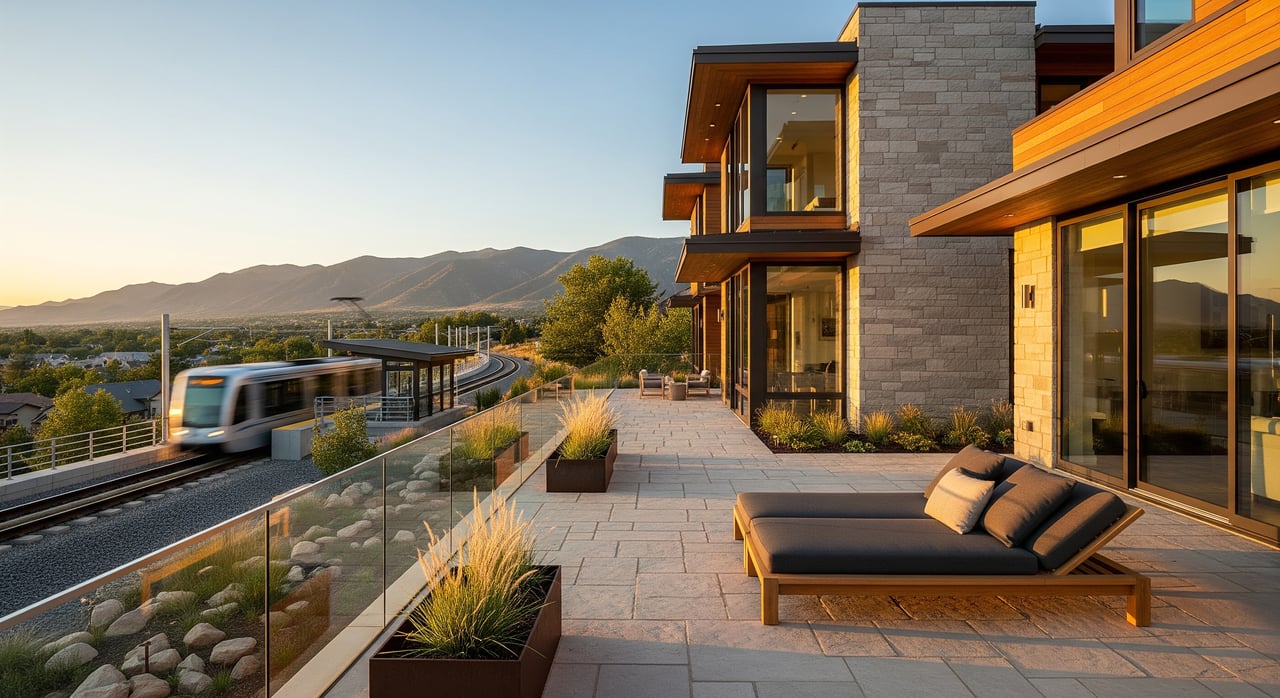
Is a 5 to 10 minute walk to light rail worth reshaping your Lakewood home search? If you commute into downtown or value simple, car-light living, the RTD W Line can change your priorities fast. You want a home that fits your budget, your routine, and your long-term goals without sacrificing comfort or convenience. In this guide, you’ll learn how the W Line affects inventory, commute choices, pricing patterns, and practical search tactics so you can target the right micro-locations in Lakewood with confidence. Let’s dive in.
Why the W Line matters in Lakewood
The W Line links Lakewood’s neighborhoods to central Denver and Union Station. For many buyers, that fixed rail connection means more predictable travel than relying only on highways and arterials. It also creates distinct micro-markets around each station, where you’ll often find different property types and price dynamics compared with areas farther out.
Buyers, downsizers, and some investors commonly prioritize station proximity. They filter for walkability, transit access, and commute time, then balance that against space, privacy, and price. Sellers benefit too, because well-located properties near stations often draw broader interest and can sell faster when the walk-to-transit value is clear.
Commute timing and frequency basics
The W Line’s appeal starts with predictable service. Typical expectations include tighter peak headways in the 8 to 15 minute range and off-peak service around 15 to 30 minutes. From central Lakewood stations, train time into downtown often falls in the 20 to 35 minute window. Exact times vary by station, time of day, and transfers if you are heading beyond downtown.
For first- and last-mile connections, many buyers lean on walking, biking, or park-and-ride options. If you plan to drive to the station, lot availability and costs influence your routine. If you bike or use scooters, local paths and street design matter. Reliability and on-time performance are also part of the decision, especially for daily commuters.
Distance bands to focus your search
Most buyers evaluate homes by how far they are from a station and what that means for daily life. Here is a simple framework you can use:
- 0 to 0.25 mile: Core station area. Highest convenience, usually the most walkable. Often more condos and mixed-use buildings.
- 0.25 to 0.5 mile: Immediate neighborhood. Still a short walk, with a bit more housing variety. This zone is a common sweet spot for value and convenience.
- 0.5 to 1.0 mile: A long walk or short bike ride. Prices can ease and single-family options increase.
- 1+ mile: Primarily single-family areas. You trade walkability for yard space, privacy, and often a wider selection of detached homes.
If you want a simple rule of thumb, start with a 0.5-mile circle around your preferred stations to compare options, then widen to 1 mile to capture more single-family homes.
What you will find near stations
Station core areas in Lakewood usually tilt toward higher-density housing and mixed use. As you step out to 0.25 to 0.5 mile, you will still see townhomes and condos, plus more duplexes or smaller-lot homes. Beyond 0.5 mile, single-family options become more common.
Research on rail access and home values often finds a positive effect near stations. Studies regularly report premiums that can range from a few percent up to around 10 percent or more, depending on distance, property type, and neighborhood context. The biggest effects tend to cluster within 0.25 to 0.5 mile and are often more pronounced for condos. Local results vary, so it is smart to compare recent sales by distance band for the stations you favor.
How to search smarter for W Line access
Most home search sites and MLS tools make it easy to focus on transit-oriented locations. Use this step-by-step approach:
- Map your commute goals
- Identify your likely destination, such as downtown or Union Station.
- Decide if you want to walk daily or prefer a short bike or drive-to-transit routine.
- Draw station buffers
- Create 0.25, 0.5, and 1.0 mile circles around your target stations.
- Save these as custom searches so you can track new listings.
- Filter by property type and lifestyle
- Near stations, filter for condos or townhomes if you want turnkey, low maintenance.
- In the 0.5 to 1 mile band, include single-family homes to capture more space and yards.
- Use commute and convenience cues
- Compare door-to-door time by time of day, including transfers if needed.
- Check local walkability and transit indicators to confirm everyday convenience.
- Validate tradeoffs in person
- Walk the route you would use to the station.
- Visit during peak and off-peak times to gauge crowds, noise, and parking.
Planning, zoning, and future supply
City planning and zoning around Lakewood’s W Line stations shape the mix of homes you will see now and over time. Station-area plans and TOD-friendly zoning can allow higher densities, mixed-use buildings, and pedestrian improvements. Public investments in streetscape, bike lanes, and new retail can lift convenience and buyer interest. Large private projects can bring more homes to market, although phased construction may temporarily affect traffic, noise, or parking.
If you are weighing long-term value, it is helpful to understand what is allowed near your preferred stations and whether any major projects are in the pipeline. That context can influence both near-term inventory and the neighborhood feel you will experience day to day.
Sellers: Position your home near the W Line
If you live near a W Line station, lean into the lifestyle it unlocks. Buyers want clarity on everyday benefits, not just the rail map. Consider these tips:
- Lead with convenience: Show the real walk time to the platform and to nearby shops or parks.
- Stage for urban-living appeal: Highlight flexible spaces for work, bikes, or strollers.
- Market the commute: Share typical peak travel windows and options for first- and last-mile connections.
- Address tradeoffs: Note sound-reducing features, parking strategies, and any HOA perks.
Well-presented homes in walkable, amenity-rich station areas often draw more showings and can sell faster when the transit story is clear.
Buyers: A quick station-area checklist
Use this fast checklist when touring near a W Line station:
- Walkability: Safe, well-lit, direct paths to the station and daily needs.
- Commute rhythm: Peak frequency, off-peak gaps, and transfer needs for your job.
- Noise and vibration: Train horns, crossings, or curves that may affect sound.
- Parking: Drive-to-transit options for you or guests in peak periods.
- Property type: Condo and townhome rules, fees, and storage for bikes or gear.
- Future changes: Planned projects, rezoning, or street upgrades that may alter streetscape and value.
Which micro-location fits your goals
Choose your ring based on how you live today and how you expect to live in five years:
- 0 to 0.25 mile if you want maximum convenience and low-maintenance living.
- 0.25 to 0.5 mile if you want a short walk with a blend of housing choices.
- 0.5 to 1.0 mile if you want more single-family options at a potentially lower price point.
- 1+ mile if you value yard space and privacy and plan to bike, bus, or drive to the station when needed.
If investment potential matters, remember that many studies find price effects are strongest within 0.25 to 0.5 mile, especially for condos and townhomes. For long-term comfort, weigh that against your need for space, parking, and quiet.
Putting it all together
The W Line reshapes Lakewood home searches by turning station proximity into a core filter. You will make the best decision by thinking in rings, matching property types to your lifestyle, and checking commute timing at the hours you actually travel. For sellers, telling a clear transit story can capture demand. For buyers, balancing walkability with space and budget leads to the right micro-location.
If you want a station-by-station game plan, local sales comparisons by distance band, and a tailored list of active homes that fit your commute and lifestyle, reach out to Alfredo Rodriguez for a friendly, data-informed strategy.
FAQs
How does the RTD W Line affect Lakewood commute times?
- Typical expectations include tighter peak headways around 8 to 15 minutes, off-peak around 15 to 30 minutes, and central Lakewood to downtown train time often in the 20 to 35 minute range.
What types of homes cluster near Lakewood W Line stations?
- Station cores often feature condos, townhomes, and mixed use, while single-family homes become more common from 0.5 to 1 mile and beyond.
Do homes near W Line stations sell for more in Lakewood?
- Research often shows a positive price effect near rail stations, commonly strongest within 0.25 to 0.5 mile and particularly for condos, though results vary by location and property type.
What are the tradeoffs of living close to a light-rail station?
- Benefits include walkability and predictable travel, while tradeoffs can include higher density, potential noise, and parking dynamics in peak periods.
How close should I live to a W Line station to benefit?
- The strongest benefits are usually within about 0.25 to 0.5 mile for daily walking, with many buyers still valuing access up to 1 mile using bikes or a short drive.
What should sellers near a Lakewood W Line station highlight?
- Emphasize walk time to the platform, nearby amenities, typical peak travel windows, storage and parking solutions, and any features that reduce noise or improve daily convenience.